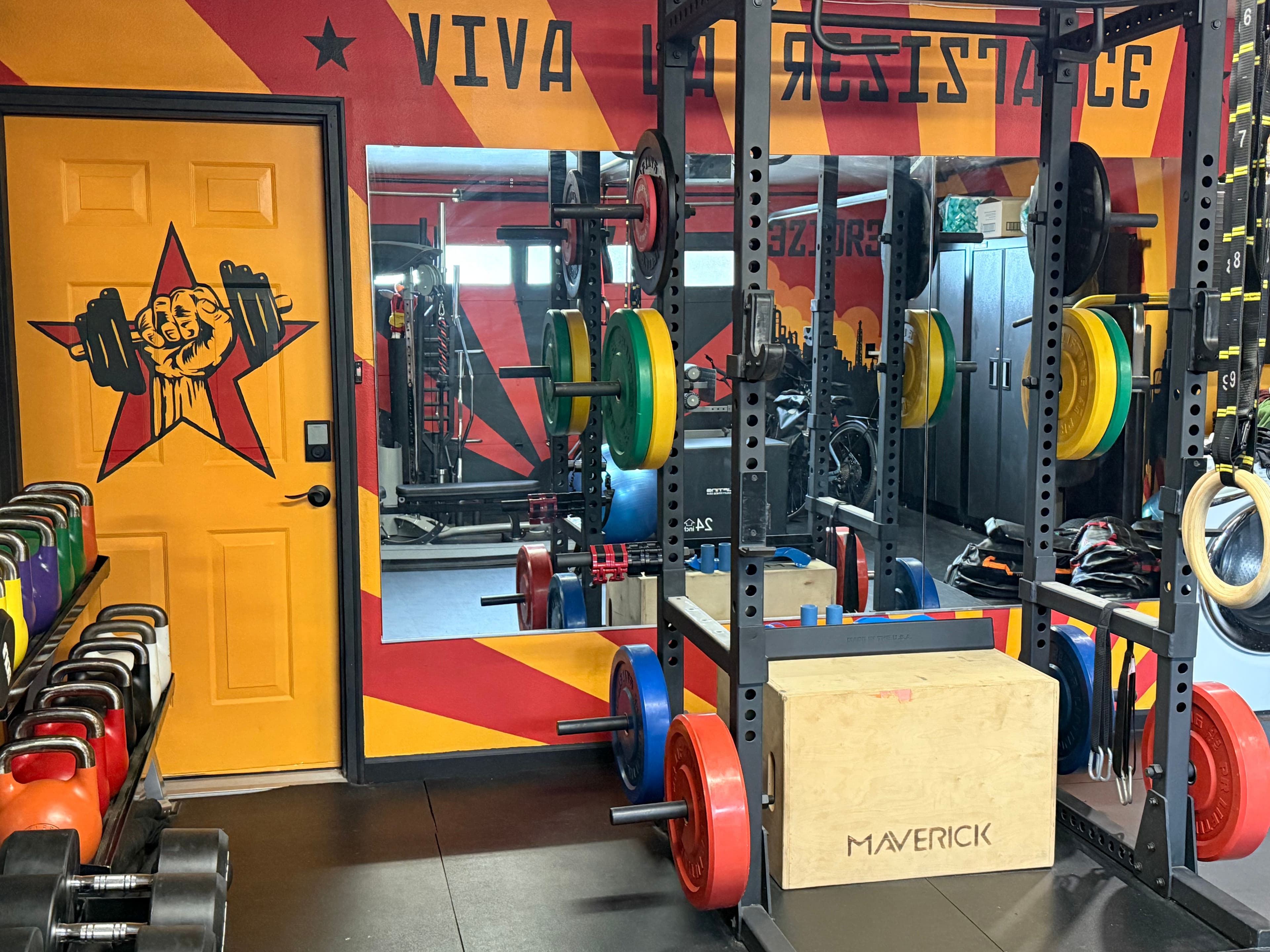
Field Report: Why the Kettlebell Is the Resistance's Secret Weapon
The Soviet Secret
In the 1700s, Russian farmers used cast iron counterweights called girya to weigh their grain — and then, being Russians, they started swinging them for sport. By the 20th century, the Soviet military had adopted kettlebell training as a standard conditioning tool for its soldiers, cosmonauts, and special forces.
The reason? A single kettlebell can develop strength, power, endurance, and coordination simultaneously. It is, in the truest sense of the word, a complete training system.
Why It Works
The kettlebell swing is not a bicep curl. It's not a squat. It's not a cardio machine. It is a ballistic hip hinge that trains the posterior chain — glutes, hamstrings, erectors — at high velocity, while simultaneously demanding grip strength, shoulder stability, and cardiovascular output.
In 20 minutes of kettlebell swings, you will:
The Hierarchy of Movements
At VLR, we teach the kettlebell curriculum in this order:
1. The Swing — Foundation of all ballistic work. If your swing is wrong, nothing else will be right.
2. The Clean — The swing's technical cousin. The bell should float to the rack, not crash into your forearm.
3. The Press — Raw shoulder and tricep strength. Build it from the rack.
4. The Snatch — The king of kettlebell movements. Power from the hip, lock it out overhead. One motion, one breath.
5. The Turkish Get-Up — Not ballistic. Pure controlled movement through the ground-to-standing pattern. The most comprehensive single exercise in existence.
Your Assignment
If you've never trained with a kettlebell, report to Steel Bell class. If you have, you should be in Kettlebell Kommand. If you're in Kettlebell Kommand, book a session with me for Double Trouble.
No exceptions. No alternatives.
— Lt. Ana Vega
Tagged: